

Arrhopalites caecus Globular Cave Springtails for Sale
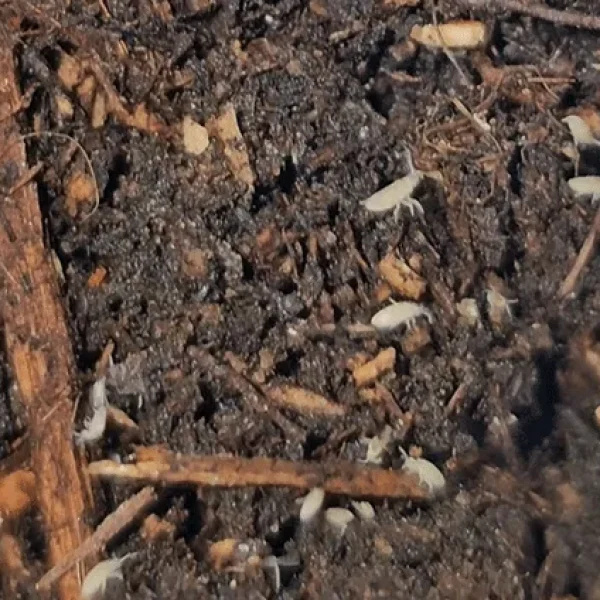
Globular cave springtails are the round, hopping, cartoon-shaped springtails customers usually buy when they want something fun to actually look at inside a culture or vivarium. Unlike the more common elongated white springtails that disappear into the substrate within seconds, Arrhopalites caecus has a compact pinhead-shaped body that stays visible on glass, leaf litter, and substrate surfaces. They are sold by TC INSECTS as a soil-dwelling collector culture, not a high-volume cleanup workhorse, and they ship in a substrate-based culture rather than on pure charcoal water. One honest note up front: they jump, so a secure lid is non-negotiable from the moment the cup is opened.
Overview
This species sits in a different lane than the white tropical springtails most keepers start with. Globular cave springtails are bought for visibility, novelty, and culture variety rather than for raw cleanup output. They establish quietly, prefer a moist soil-style medium, and reward keepers who give them stable humidity and consistent low-level feeding.
Pronunciation
ar-oh-PAL-ih-teez SEE-kus
Care Level
Beginner to intermediate. Easy to keep alive in a stable moist culture. Slightly more particular than common tropical white springtails because they prefer soil-based media and steady moisture rather than the float-and-tap charcoal style.
Appearance and Size
Globular cave springtails are short, round, and chunky compared to the long-bodied Folsomia and Entomobrya species. Their fused body shape gives them the nickname “dirt cheetos” among hobbyists. They are small but noticeably more visible than typical white tropical springtails because of that rounded silhouette and bouncing movement.
Adult Size
Small. Visible to the naked eye on a clean substrate or glass surface, especially when active.
Reproductive Rate
Moderate in a well-maintained soil culture. Slower to explode in numbers than tropical white springtails, which is part of why they are sold as a collector and display culture rather than a feeder factory.
Springtail Care
Temperature
70 to 80°F is the working range for this culture. Room temperature in most homes is fine. Avoid placing the culture near heat lamps, sunny windows, or cold drafts.
Humidity
Keep humidity high, in the 75 to 90 percent range. The substrate should stay visibly moist but never flooded. If you tilt the culture and water pools at the bottom, drain some out or add dry substrate. Springtails need moisture access at all times. Do not let any springtail culture dry out, and do not market or treat them as suitable for dry setups.
Culture Setup
- Container with a tight secure lid. Globular springtails jump and will exit any loose-fitting cup.
- Substrate of moist soil, a soil and charcoal mix, or coco-based culture medium. Soil-style media suit this species better than pure charcoal water.
- Small ventilation holes or a micropore lid for airflow.
- A piece of bark, leaf litter, or charcoal on top to give surface area for grazing.
Diet and Feeding
Biofilm, Mold, and Organic Matter
This species helps consume mold, fungi, biofilm, and small organic debris when added to a bioactive enclosure with enough moisture. They contribute to cleanup crew function, but they do not replace enclosure maintenance and should not be expected to eliminate a mold problem on their own. Airflow, watering habits, and substrate choice matter more than springtail count.
Supplemental Food
In a dedicated culture, feed small pinches of yeast, uncooked rice or couscous grains, or vegetable scraps. Many keepers prefer a balanced dry powder to avoid the smell and mite risk that comes with raw vegetable scraps. A measured food works cleaner than guessing with kitchen leftovers.
Feeding Notes
- Feed sparingly. Uneaten food is the number one cause of culture crashes.
- Add the next small pinch only when the previous food is gone or close to gone.
- Remove visibly moldy food chunks. Light surface mold that springtails are working on is normal.
- Spot mist if the substrate surface starts looking dry.
Breeding and Culture Growth
Globular cave springtails breed steadily when humidity stays high and the substrate stays consistently moist. Egg laying drops off in dry or unstable cultures. Most keepers see clear population growth within a few weeks of receiving a starter culture, with surface activity becoming more obvious as numbers build up.
Culture Maintenance
- Keep one main culture and at least one backup culture in a separate container.
- If the main culture crashes, the backup rebuilds the colony with no reorder needed.
- Refresh substrate when it becomes packed, sour-smelling, or fouled with old food.
- Avoid mixing this species into a culture with aggressive faster-breeding springtails if you want to keep them visibly identifiable.
Natural Habitat Background
The common name “globular cave springtail” reflects the cave and cave-adjacent habitats this group is associated with in the wild. The trade form sold for vivarium use is kept under standard captive husbandry rather than cave conditions, so customers should treat this as a hobby culture and not as a wild-caught locality-specific specimen. Origin in the live insect trade is not always cleanly documented.
Best Uses
- Collector and display cultures where keepers actually want to see their springtails.
- Adding microfauna diversity to a vivarium that already runs tropical white springtails.
- Bioactive setups with planted areas, leaf litter, and consistent humidity.
- Dart frog and small amphibian enclosures with stable moisture.
- Backup culture variety for keepers who run multiple springtail species.
Not Best For
- Bone-dry desert-style enclosures.
- Keepers who want the fastest possible mass-producing cleanup species. A tropical white springtail will outproduce this one.
- Open-top tubs or loose lids. Globular springtails jump and escape easily.
- Primary feeder colonies for animals that need high-volume tiny prey. Choose this for cleanup and culture variety, not as a feeder factory.
Receiving and Acclimation Guidance
When the culture arrives, open it in a draft-free area away from pets. Let it sit at room temperature for a few hours before feeding or transferring. If the substrate looks dry from shipping, lightly mist it. Do not flood the culture trying to “rehydrate” it. If you plan to seed the culture directly into a vivarium, make sure the receiving enclosure animals and plants tolerate the added soil-based culture medium.
Frequently Asked Questions
Will I see them right away?
Often yes. Their round bouncing shape makes them easier to spot than typical white springtails, especially on glass and surface debris. Activity is usually highest right after light misting.
Can I keep globular cave springtails with isopods?
Yes, in a bioactive enclosure they coexist fine with most common isopod species. In a dedicated breeding culture, keep them separate so each colony stays easy to harvest and count.
Will they get rid of mold in my vivarium?
They help consume mold, fungi, and biofilm, but they will not solve a moisture or ventilation problem. If you have recurring mold, fix airflow and watering first, then let springtails do supplemental cleanup.
Are these the same as the white tropical springtails most people use?
No. White tropical springtails are typically long-bodied, faster reproducing, and better as a pure cleanup workhorse. Globular cave springtails are bought for visibility, culture variety, and the distinctive rounded look.
Do they jump out of the culture?
Yes. They are strong jumpers. A secure lid with fine ventilation is required at all times.
Learn More About Springtails and Bioactive Care
- University of Florida Featured Creatures: Springtails: Overview of springtail biology, habitat preferences, and basic identification.
- American Museum of Natural History: Springtails Overview: Background reading on what springtails are and how they fit in the arthropod world.
- Make Sure to check out our Springtail blog
Final Notes
Globular cave springtails are a step-up culture for keepers who already run a basic springtail bin and want something more interesting to look at. Keep humidity stable, feed lightly, lid it tight, and keep one backup culture. Do that, and this becomes one of the more rewarding springtail cultures in the hobby.


Kevin Brooks (verified owner) –
Ordered 10 and used usps flat rate. They shipped next day and i got them two days later – from tx to ky. All the little dirt cheetos were alive and well. Super happy with this order!