Wingless Melanogaster Fruit Fly Culture for Sale
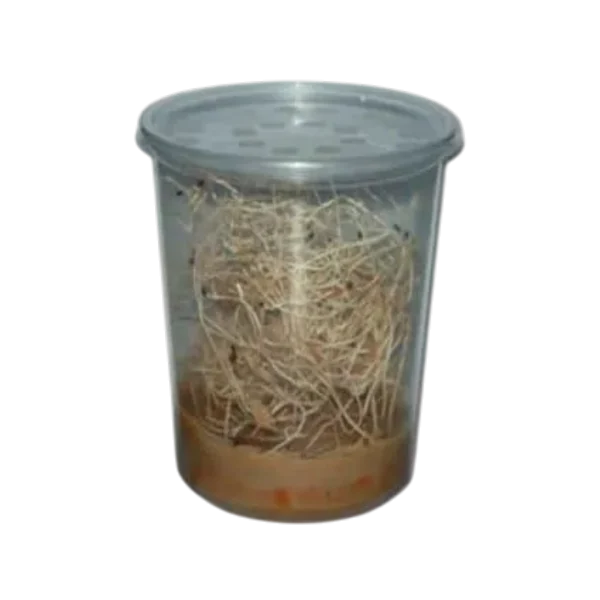
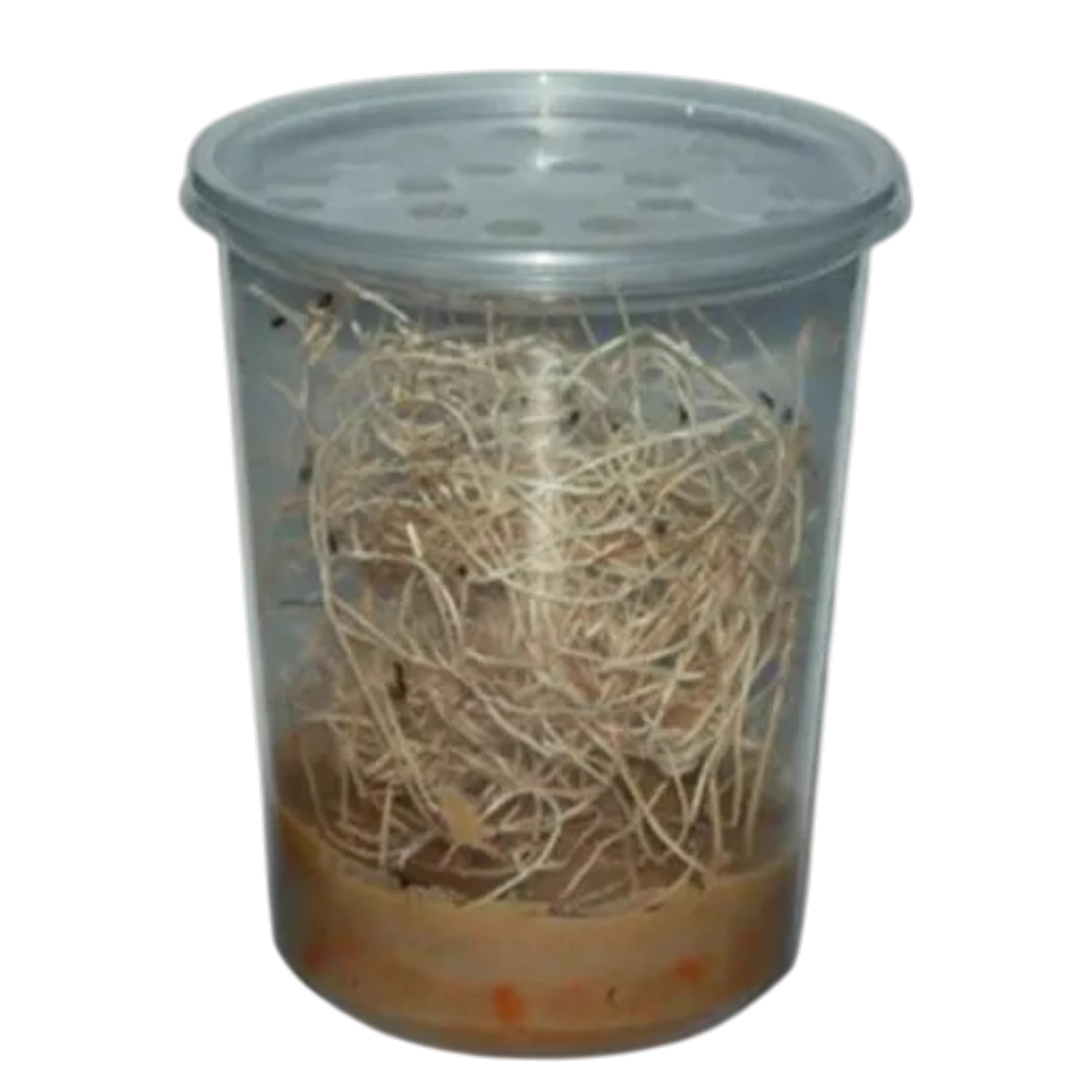
This is a live, producing culture of flightless fruit flies, Drosophila melanogaster. The adults run about 3mm and belong to a wingless strain, so they cannot fly away while you feed. Because the culture is prolific, it produces a steady supply of small flies for tiny and young animals. It arrives in a 32oz cup with TC’s Super Swarm Media, the food the colony breeds in. In short, it is one of the easiest staple micro-feeders to keep on hand.
Overview
Melanogaster is the smaller, faster-breeding of the common feeder fruit flies. The wingless trait keeps the flies walking instead of flying, which makes harvesting simple. As a result, this culture suits keepers who feed small animals often and want low fuss.
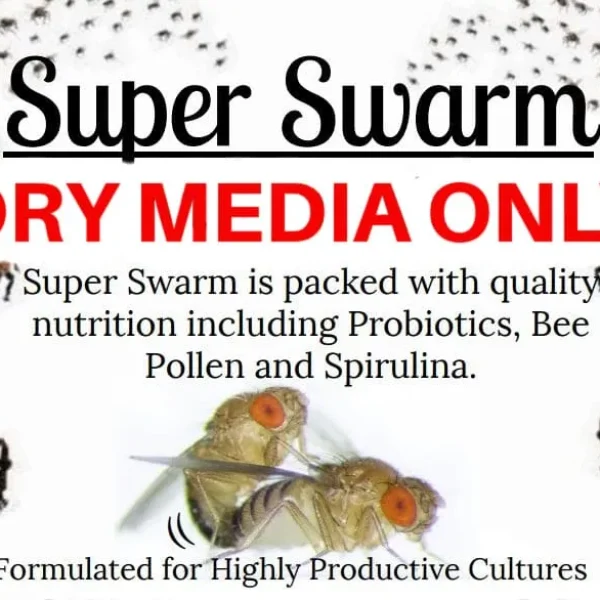
The Super Swarm Media lists vitamins, minerals, probiotics, proteins, lipids and fatty acids, enzymes, carotenoids, and bioflavonoids. Together these support a healthy, productive culture.
Melanogaster or Hydei?
Pick by the size of your animal. Melanogaster is smaller and breeds faster, so it fits dart frogs, tiny geckos, mantis nymphs, and spiderlings. For larger small animals, the bigger Hydei fruit fly is often a better match. Many keepers run both for variety.
Using Your Culture
A producing culture is simple to manage, and most of the work is just harvesting.
Starting a Fresh Culture
If you receive a fresh culture, give it about 10 to 12 days for the flies to lay eggs and build up. However, if the cup already holds larvae or pupae, you can start feeding right away.
Conditions
Keep the culture at normal room temperature and out of direct sun. Stable warmth keeps production steady, while heat or cold slows it down.
Harvesting and Dusting
Tap flies into a separate cup, then dust them with calcium and a multivitamin before feeding. Tapping the cup keeps the flies down so they do not climb out.
Keeping a Steady Supply
Each culture produces for a few weeks, then slows as it ages. Therefore, stagger several cultures or start your own so flies are always ready.
Honest Note on Dusting and Culture Life
Fruit flies, like most feeders, are low in calcium. For that reason, dust them with a supplement such as TC Calcium Ultra Fine before each feeding, especially for animals prone to metabolic bone disease.
Also, a culture does not produce forever. Output rises, peaks, then fades over a few weeks. So plan to replace or refresh cultures on a rotation. Finally, these flies are small, which makes them a staple for tiny animals but too small to be a main feeder for larger pets.
Best For
- Poison dart frog keepers who need a reliable staple micro-feeder.
- Keepers of small or newly hatched reptiles and amphibians.
- Mantis nymph and spiderling keepers feeding tiny prey.
- Anyone who wants an escape-resistant, flightless feeder.
Not Best For
- Keepers of larger animals, since these flies are small and better as a staple for tiny pets.
- Anyone wanting a slightly larger fly, who may prefer Hydei.
- Keepers who will not dust feeders, because plain flies are low in calcium.
Recommended Add-Ons
- TC Calcium Ultra Fine to dust flies before feeding.
- Hydei Fruit Fly Culture for a larger fly and more variety.
- Super Swarm Fruit Fly Kit to culture your own flies at home.
- Springtails as a companion micro-feeder for dart frogs.
- Bean Beetle Culture Kit for another small-feeder option.
Frequently Asked Questions
What is a wingless fruit fly culture?
It is a live, producing colony of flightless Drosophila melanogaster in a 32oz cup with media. The flies breed in the cup, so you can harvest them as a feeder.
When can I start feeding from it?
If the culture is fresh, give it about 10 to 12 days to produce. If it already contains larvae or pupae, you can feed flies right away.
How do I harvest and feed the flies?
Tap the flies into a separate cup, then dust them with calcium and a multivitamin. Keep tapping the cup down so the flies do not climb out.
Should I get wingless melanogaster or Hydei?
Choose by animal size. Melanogaster is smaller and suits dart frogs and tiny animals, while Hydei is larger for slightly bigger pets.
Do the flies really not fly?
This is a flightless strain, so the flies walk and climb instead of flying. Keep the lid secure and tap them down, since a rare flighted fly can still appear.
How do I keep a constant supply?
Each culture produces for a few weeks, then fades. So stagger several cultures, buy in bulk packs, or start your own with a Super Swarm Kit.
Learn More About Fruit Flies
These sources cover the biology of the fly behind your feeder culture.
- eLife: The Secret Lives of Drosophila Flies. A peer-reviewed look at the natural history of Drosophila melanogaster, useful background on the fly you are culturing.
- How and Why Drosophila Became a Model Organism. A review explaining the fast life cycle and prolific breeding that also make this fly an easy feeder to culture.
- ScienceDirect: Gut Loading (veterinary overview). A reference on why feeder insects need supplementation, which supports dusting flies with calcium before feeding.