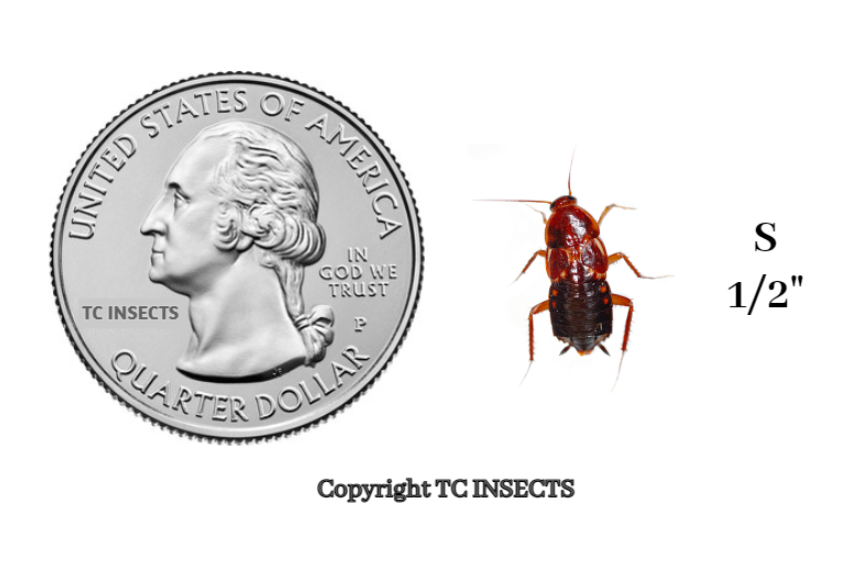
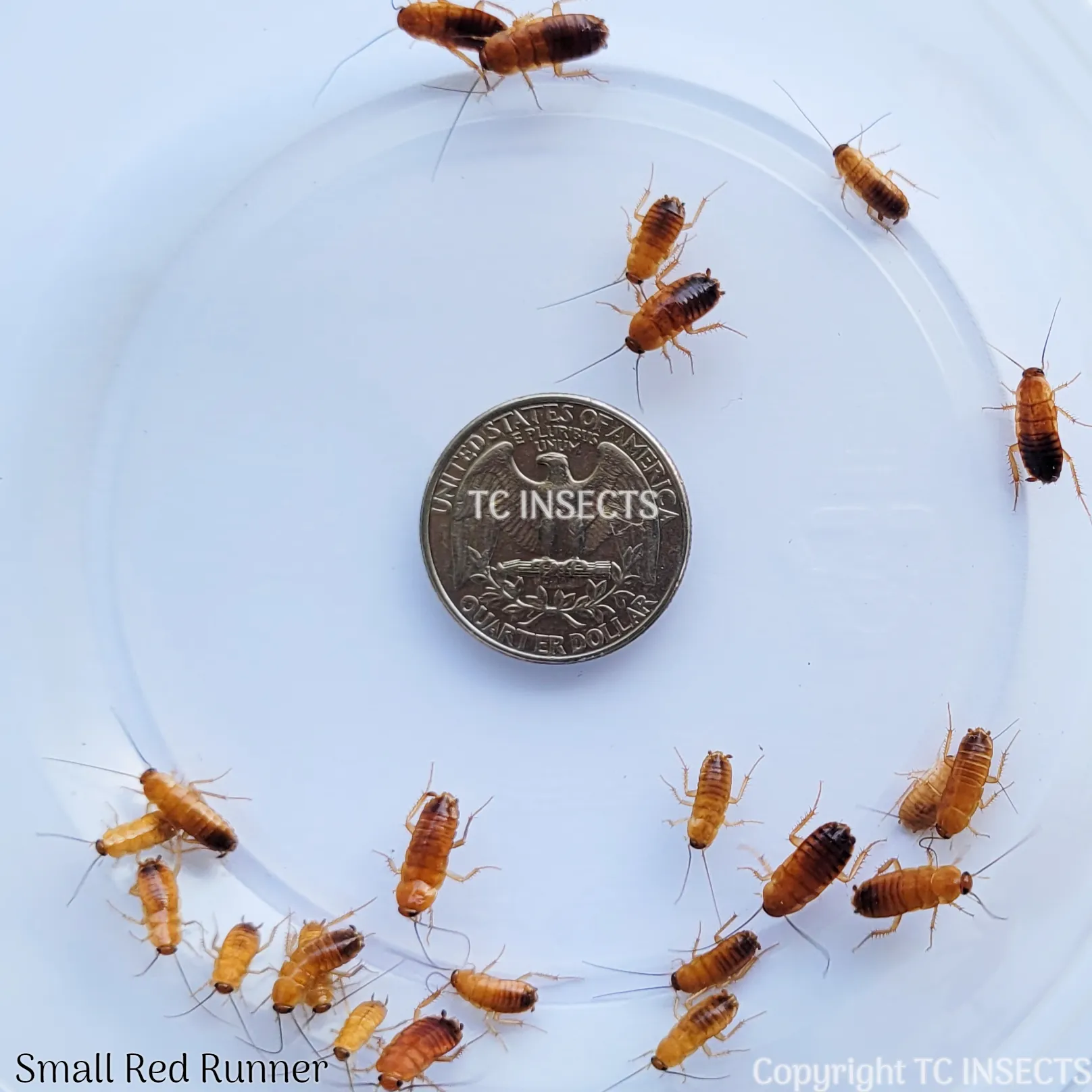
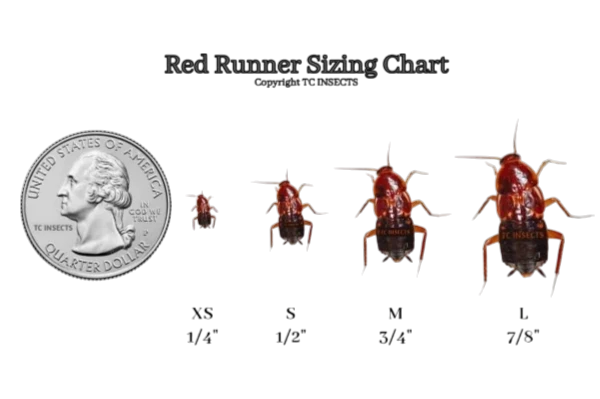
Wholesale Red Runner Roaches 1/2″ for Sale
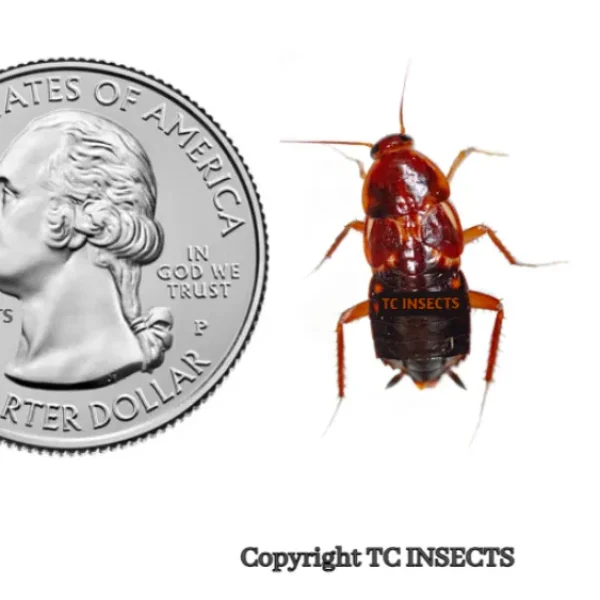
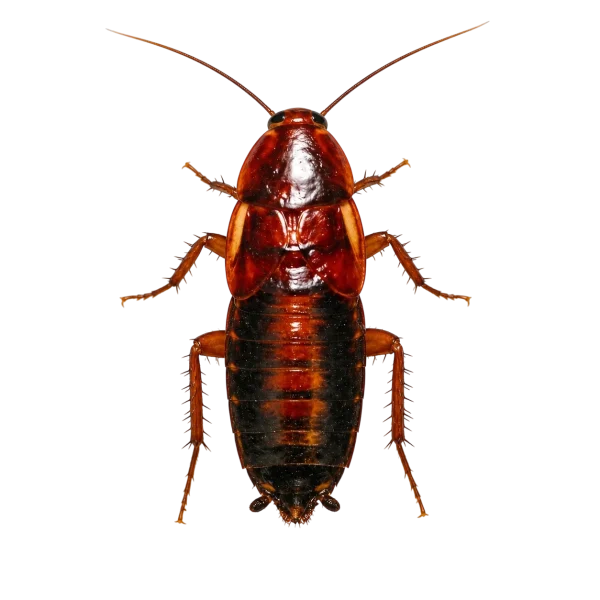
This is the wholesale, bulk-quantity version of our small 1/2″+ red runner roaches, Blatta lateralis (also called the Turkestan or rusty red roach). It ships in thousands at a lower cost per roach, at a larger feeding size than the 1/4″ wholesale tier. So you get roaches closer to feeding size with less grow-out. TC breeds them from a captive colony started in 2017.
Built for Volume
Buying at this size in bulk lowers your cost per roach and gives you feeders ready sooner. So it suits feeder breeders, reptile stores restocking, rescues, and keepers with many animals. For the smallest nymphs in bulk, see the wholesale 1/4″ tier, and for smaller amounts, the retail 1/2″ pack.
A Fast, Active Feeder
Red runners live up to their name. Their speed prompts a strong feeding response, and unlike dubia they do not burrow into substrate to hide. They cannot climb smooth surfaces, the females are wingless, and the males only flutter, so a vented bin keeps even a large batch contained.
Nutrition and Dusting
Red runners are similar to dubia in nutrition, high in protein with moderate fat, and they have tested with useful B12. Like most feeders, they are low in calcium with an inverse calcium-to-phosphorus balance, so dust them with TC Calcium Ultra Fine and gut-load them on a quality roach feed before feeding.
Care and Setup at Scale
Keep red runners warm, around 70 to 85°F, in vented bins with vertical egg flats and no substrate. Allow roughly 20 gallons of bin space per 1,000 adults. Keep them fairly dry, limit fruit and veg, and offer moisture with water crystals rather than open dishes. They are tropical, so keep them warm, not refrigerated, and keep bins clean to control odor.
Best For
- Feeder breeders who want feeders ready sooner.
- Reptile stores and rescues buying in volume.
- Keepers with many small-to-mid animals.
- Bulk feeding at a lower cost per roach.
Not Best For
- A single pet, where the retail 1/2″ pack fits better.
- The smallest animals, which suit the wholesale 1/4″ or retail nymphs.
- A calcium source, since red runners need dusting.
Recommended Add-Ons
- Supreme Feed to gut-load and breed a large colony.
- Jumbo Water Crystals for clean, spill-free moisture at scale.
- TC Calcium Ultra Fine to dust them before feeding.
- Wholesale 1/4″ Red Runners for the smallest nymphs in bulk.
- Red Runner Roaches to browse all sizes and counts.
Frequently Asked Questions
What is the wholesale 1/2″ pack?
It is the bulk version of the small 1/2″+ red runner, sold in thousands at a lower cost per roach, at a feeding size that needs less grow-out.
Who is it for?
Feeder breeders, reptile stores, rescues, and keepers with many animals who want bulk feeders ready sooner.
Do I need to dust them?
Yes. Red runners are low in calcium like most feeders, so dust them with calcium and gut-load them before feeding.
How do I house a large batch?
Use warm, vented bins with egg flats, about 20 gallons per 1,000 adults, kept fairly dry with water crystals. Do not refrigerate them.
Wholesale 1/4″ or 1/2″?
Choose 1/2″ for feeders ready sooner, or the wholesale 1/4″ for the smallest nymphs and the lowest unit cost.
Learn More About Feeder Roaches
These sources cover feeder roach nutrition and biology.
- ABVP: Feeder Roach Nutrition. A veterinary overview of feeder roaches and the inverse calcium-to-phosphorus ratio common to most feeders.
- ScienceDirect: Gut Loading (veterinary overview). A reference on gut-loading and supplementing feeder insects, which supports dusting roaches.
- Blatta lateralis Overview. A reference on the Turkestan cockroach and its biology.
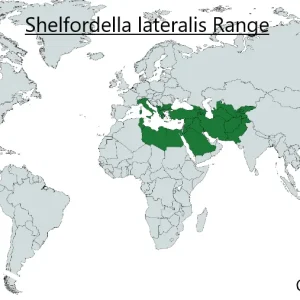
Red Runner Roaches Natural Habitat:
The native range includes Northern Africa and Stretches into Central Asia. Reported Invasive to southern Florida, USA.
TC INSECTS FEEDER NUTRITION TABLE
The Nutritional Contents of the Red Runner Roach will be similar to Dubia of equal size. However, this species has tested with higher levels of B12. Which helps energy and metabolism in reptiles.
|
Species |
Protein % |
Fat % |
Fiber % |
Calcium_(mg/kg) |
Phosphorus_(mg/kg) |
|
Crickets |
15.3 |
3.2 |
2.1 |
275 |
2510 |
|
Dubia |
22.9 |
7.1 |
2.8 |
798 |
2623 |
|
BSFL |
17.4 |
13.8 |
2.9 |
9380 |
3540 |
|
Superworms |
19.6 |
17.6 |
2.5 |
180 |
2350 |
|
Mealworms |
18.7 |
13.3 |
2.6 |
169 |
2980 |
|
Silkworms |
9.6 |
1.1 |
1 |
185 |
2400 |
|
Fruit Flies |
21.5 |
6 |
2 |
526 |
4000 |
|
Spikes |
17 |
12.5 |
2 |
5230 |
3540 |
|
Hornworms |
9 |
3 |
0.5 |
470 |
2000 |
Species-Specific Myths
There are rumors that this species can infest a house. However, this species has the same chances of infesting a house as a Dubia Roach. If you have a clean house, this species cannot and will not infest. Roaches need
proteins to make eggs and reproduce. So if you are not already dealing with a roach problem in your home, then this species poses you no risk. Keepers that have experienced indoor infestations from this species had to
have the ideal conditions for it to occur. Keep pet safe roach poison if this is something you might be concerned with.