
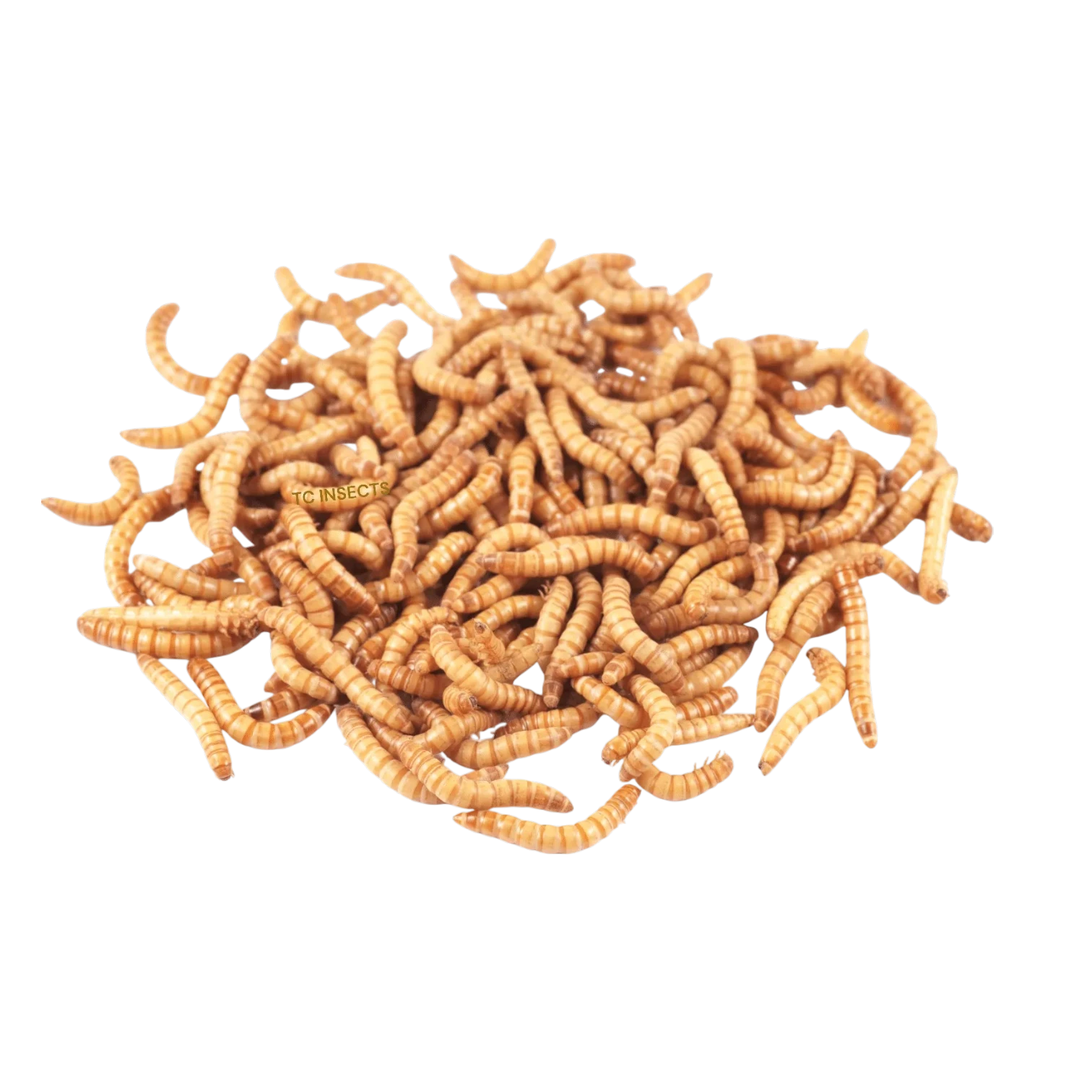
Medium Mealworms for Sale
Medium mealworms are about 3/4″, the size between small and large. They are the larvae of the beetle Tenebrio molitor, and they are protein-rich and easy to store. This size suits mid-sized reptiles, amphibians, and birds that have outgrown the smaller worms but are not ready for the full 1″ size. Offer them within a varied diet, and dust them first.
A Mid-Size Step
Medium worms bridge the gap in the size ladder. So they work well as your animal grows from the small size toward the large size. Like other standard mealworms, they pupate normally, so you can also culture them if you want to keep a colony going.
Dust for Calcium and Feed in Moderation
Mealworms are sometimes called a calcium source, but they are not. They are low in calcium and carry more phosphorus, like crickets. So dust them with a supplement such as TC Calcium Ultra Fine before feeding. They are also moderately fatty with a firm shell, so feed them as part of a varied diet rather than as a low-fat option.
Easy to Store
Mealworms are one of the easiest feeders to keep. Store them cool in the refrigerator to slow them, where they hold for weeks. Keep them in bran, which doubles as their food, with a slice of vegetable for moisture. Then bring them to room temperature before feeding.
Best For
- Mid-sized reptiles, amphibians, and birds.
- Animals that have outgrown small mealworms.
- Keepers who want a storable staple feeder.
- Adding protein and variety to a feeder rotation.
Not Best For
- Small or young animals, which suit the small or mini size.
- Larger animals, which suit the large or giant size.
- Keepers who will not dust feeders, since mealworms are low in calcium.
Recommended Add-Ons
- TC Calcium Ultra Fine to dust the mealworms before feeding.
- Large Mealworms for when your animal grows.
- Small Mealworms for smaller animals.
- Mealworm Bran to feed, house, and culture them.
- Live Mealworms to browse all sizes and stages.
Frequently Asked Questions
What size are medium mealworms?
They are about 3/4″, between the small and large sizes. They suit mid-sized reptiles, amphibians, and birds.
Can I breed these mealworms?
Yes. Standard mealworms pupate and can be cultured. Keep some in bran at room temperature to start a colony.
Are mealworms a good calcium source?
No. Mealworms are low in calcium and carry more phosphorus, so dust them before feeding to support bone health.
Are they low in fat?
Not really. They are moderately fatty with a firm shell, so feed them in moderation as part of a varied diet.
How do I store them?
Keep them cool in the refrigerator, where they hold for weeks. Store them in bran with a slice of vegetable, then warm them before feeding.
Which size should I pick?
Choose medium for mid-sized animals, the small size for smaller ones, or the large size for bigger ones.
Learn More About Mealworms
These sources cover mealworm nutrition and why dusting matters.
- AJVR: Calcium and Phosphorus in Mealworms and Superworms. Peer-reviewed veterinary research on the calcium-to-phosphorus balance of mealworms.
- ScienceDirect: Gut Loading (veterinary overview). A reference on why feeder insects need supplementation, which supports dusting mealworms.
- ABVP: Feeder Insect Nutrition. A veterinary overview noting the inverse calcium-to-phosphorus ratio common to mealworms and most feeders.


Reviews
There are no reviews yet.