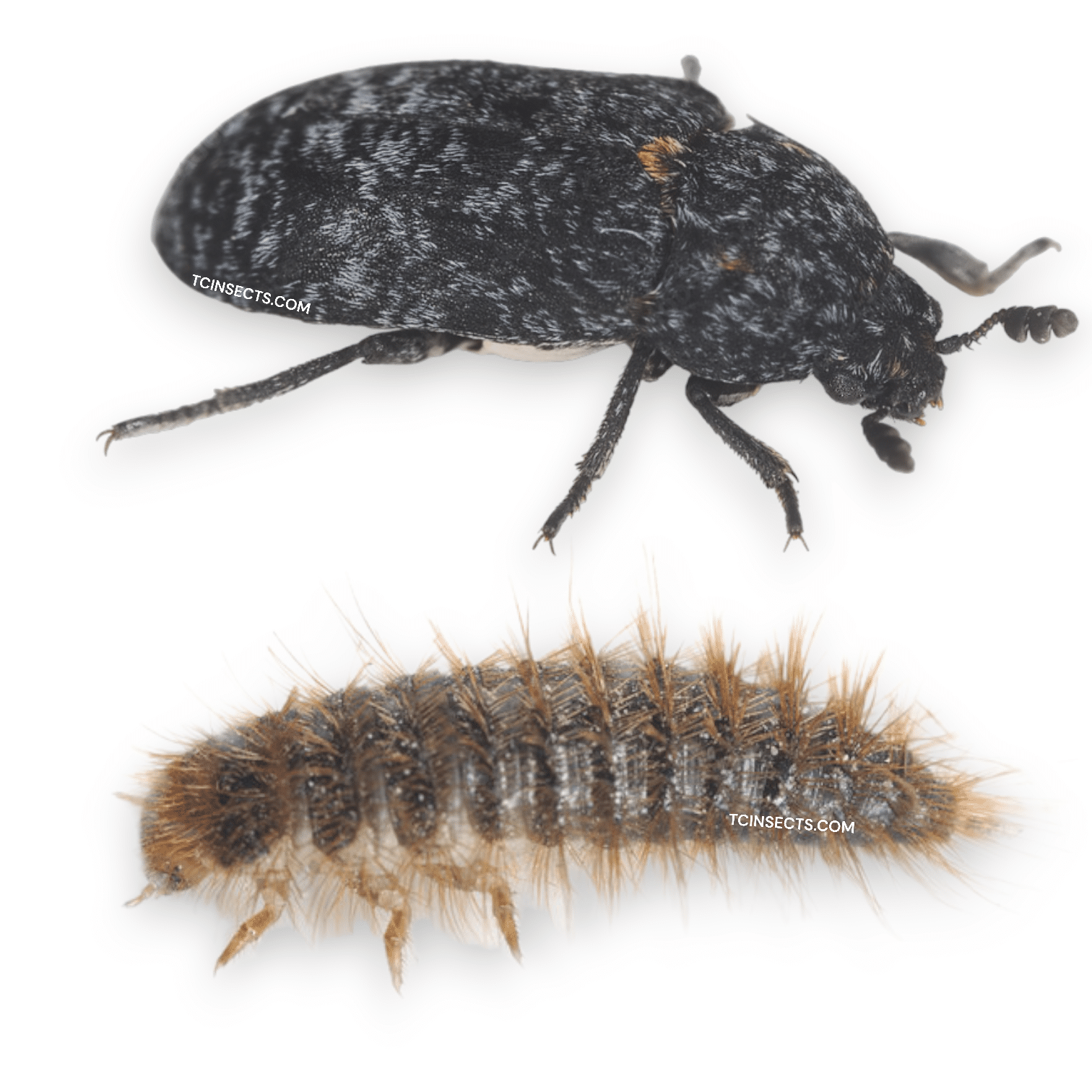

Dermestid Beetle Larvae for Sale
Dermestid beetle larvae are a natural cleaning crew, often called leather beetles and usually Dermestes maculatus. The larvae have a strong appetite for dead organic matter, so they clean in two settings. They strip flesh from bone for taxidermy, and they keep insect colonies clean. Because they eat dead tissue but ignore bone and leave live animals alone, they clean precisely. For this reason, museums and taxidermists have relied on them for over a century.
Two Ways to Use Them
The same larvae handle two different jobs.
Skull and Bone Cleaning
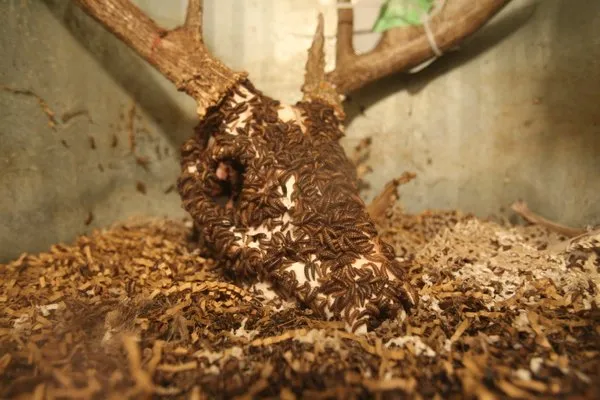
The larvae remove flesh from a prepared specimen and leave clean bone behind. They reach into fine structures like nasal cavities and sutures, so they preserve detail that boiling or chemicals can ruin. Dry and prepare the specimen first, set it on a screen or wrap it in cheesecloth, then add the larvae. Cleaning takes days to weeks depending on size and colony strength.
Insect Colony Cleanup
In an insect colony, the larvae eat dead insects, droppings, and mold. As a result, waste does not build up, which lowers the risk of mites and other pests. So they help keep a colony cleaner and healthier with little effort from you.
Keeping the Larvae
Dermestids do their best work warm, dark, and slightly humid. Keep them between 70 and 80°F and at 50 to 60% humidity, in a ventilated container with dry, absorbent bedding. Give them room, since crowding slows them down.
Choosing a Quantity
These are sold by count, from 50 up to 10,000. For a small specimen, plan on a few hundred larvae, and use more for faster results. Large skulls, such as deer or bear, clean best with 1,000 to 5,000. In general, a larger colony finishes the job sooner.
Honest Notes and Safety
Wear gloves when handling the larvae, since their fine hairs can irritate skin. Do not use them on specimens treated with chemicals, as those can harm the larvae. For bedding, a dry, inert, absorbent material works well, and many keepers avoid strongly aromatic woods around insects.
Keep the larvae contained. Dermestids are a known pest of dried specimens, wool, leather, and feathers, so escaped beetles can damage collections and natural fibers. So house them away from finished mounts, live insect cultures, and storage.
Best For
- Hunters and taxidermists cleaning skulls for trophy mounts.
- Osteology hobbyists and educators preparing skeletons.
- Keepers who want a natural cleanup crew for insect colonies.
- Anyone who wants detail preserved better than boiling allows.
Not Best For
- Feeding to reptiles or amphibians, since this is a cleanup crew, not a feeder. For feeders, see our bean beetles or rice flour beetles.
- Cleaning chemically treated specimens.
- Keepers who cannot keep the larvae contained away from collections.
Recommended Add-Ons
- 32oz Deli Cup as a container for small jobs or growing out larvae.
- Buffalo Beetle Colony as another colony cleanup beetle.
- Live Springtails as a bioactive cleanup crew for mold and waste.
- Live Isopods as another detritivore cleanup crew for enclosures.
Frequently Asked Questions
What are dermestid beetle larvae used for?
They clean skulls and bones for taxidermy, and they keep insect colonies clean by eating dead insects, waste, and mold. They eat dead tissue but ignore bone and live animals.
What species are they?
They are commonly Dermestes maculatus, the leather or hide beetle. This is the species museums and taxidermists use for skeleton cleaning.
How many do I need?
A few hundred suit a small specimen, while 1,000 to 5,000 suit large skulls like deer or bear. A larger colony cleans faster.
Can I feed these to my reptile?
No. These are a cleanup crew, not a feeder. For feeder insects, see our bean beetles and rice flour beetles.
Are they safe to handle?
Wear gloves, since the larvae have fine hairs that can irritate skin. Also avoid using them on chemically treated specimens.
Will they damage my collections?
They can if they escape. Dermestids are a known pest of dried specimens, wool, leather, and feathers, so keep the larvae contained and away from collections.
Learn More About Dermestid Beetles
These sources cover how museums and researchers use dermestid beetles.
- University of Kansas: Dermestid Beetles in Mammalogy. An academic history of how museums adopted dermestids for cleaning skeletons.
- University of Washington: The Burke Museum’s Dermestes maculatus. A museum account of cleaning specimens with dermestid beetles, including preparing a specimen first.
- Curator: The Museum Journal, Skeleton Preparation Best Practices. A peer-reviewed guide to caring for a dermestid colony.