
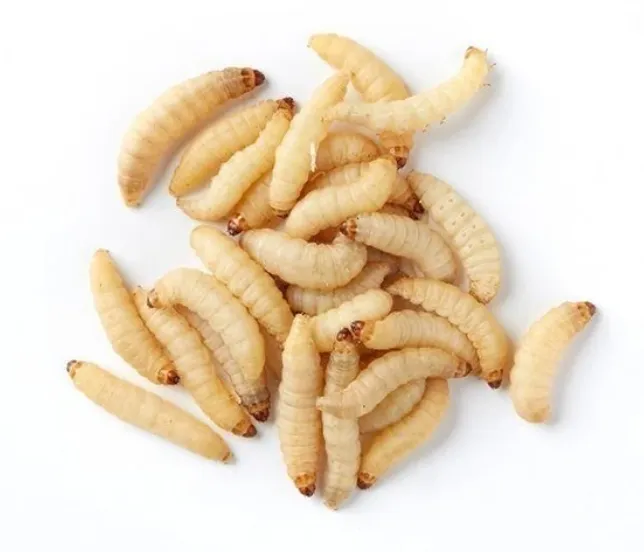
Waxworms for Sale
Waxworms are the larvae of the greater wax moth, Galleria mellonella. They get their name from the beeswax combs where they are found. Their soft skin and plump shape make them easy to digest and very appealing to insectivores. They are high in fat, so they work best as an occasional treat. This pack holds 25.
A Treat, Not a Staple
Waxworms are rich and high in fat, which is why animals love them and why you feed them sparingly. Too many can lead to weight gain, and some pets start refusing other feeders. So offer them as a treat or for variety, not as a main feeder. For a staple, use a balanced feeder and rotate waxworms in now and then.
When They Shine
The high fat and moisture make waxworms useful in specific cases. They help tempt picky eaters, add calories for underweight or recovering animals, and support breeding-season condition. Their soft skin digests easily, and lizards, insectivorous aviary birds, and wild birds all take them readily.
Dust for Calcium
Like most feeders, waxworms are low in calcium, so dust them with TC Calcium Ultra Fine before feeding. They are not the same as calcium-rich black soldier fly larvae, so treat the calcium as a separate step.
Care and Storage
Keep waxworms cool, around 50 to 60°F, where they go dormant and last several weeks. Do not chill them below 50°F. Kept warm, they pupate into wax moths, which are themselves an edible treat. Bring them to room temperature before feeding, and there is no need to feed the worms themselves.
Best For
- An occasional treat for lizards and birds.
- Tempting picky eaters to feed.
- Adding calories for underweight or recovering animals.
- Supporting condition in the breeding season.
Not Best For
- A staple feeder, given the high fat content.
- Weight-prone pets fed too often.
- A calcium source, since waxworms need dusting.
Recommended Add-Ons
- TC Calcium Ultra Fine to dust the waxworms before feeding.
- Wax Worms 100 Count for more at a lower unit cost.
- Black Soldier Fly Larvae as a calcium-rich staple to pair with the treat.
- Crickets as a balanced everyday feeder.
- Live Waxworms to browse all counts.
Frequently Asked Questions
What are waxworms?
They are the larvae of the greater wax moth, Galleria mellonella, soft-skinned and plump. They are a high-fat treat feeder for insectivores.
Can I feed waxworms as a staple?
No. They are high in fat, so feed them as an occasional treat. Too many can cause weight gain, and some pets start refusing other feeders.
When are waxworms most useful?
They help tempt picky eaters, add calories for underweight or recovering animals, and support breeding-season condition.
How do I store them?
Keep them cool, around 50 to 60°F, where they go dormant and last several weeks. Do not chill below 50°F. Warm them up before feeding.
Do I need to dust them?
Yes. Waxworms are low in calcium, so dust them with a calcium supplement before feeding.
Learn More About Waxworms
These sources cover the wax moth and feeder supplementation.
- Galleria mellonella Overview. A reference on the greater wax moth and its larvae.
- ScienceDirect: Gut Loading (veterinary overview). A reference on why feeder insects need supplementation, which supports dusting waxworms.
- Lepidoptera (Moths and Butterflies). A reference on the moth order that waxworms belong to and their larva-to-moth life cycle.
