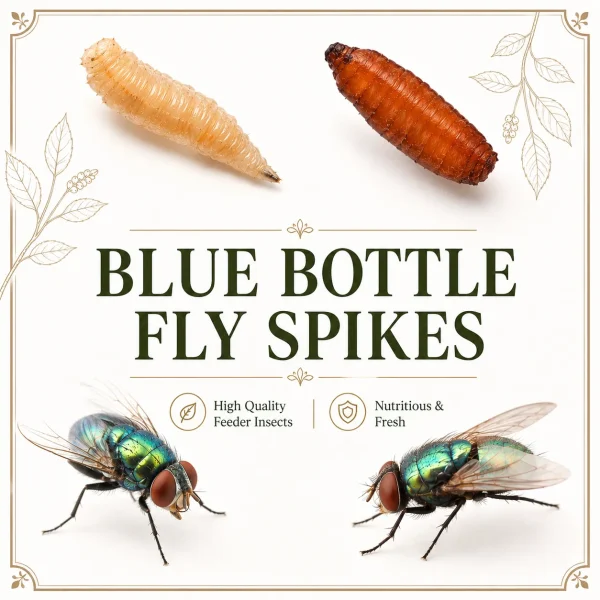
Blue Bottle Fly Larvae (Spikes) for Sale
Spikes are blue bottle fly larvae, about 1/4″ to 1/2″. They are a low-cost feeder that adds variety to your animal’s diet. Reptiles, dart frogs, and other insectivores take them, and they work as fishing bait too. This pack holds 100, an inexpensive way to mix up your feeders.
Feed as Larvae or Flies
You have two ways to use spikes. Feed the crawling larvae as they arrive, or let them pupate and emerge as blue bottle flies. The flies make a lively treat that chameleons and other hunters chase around the enclosure. So one pack can serve two purposes.
Dust for Calcium
Like most feeders, spikes are low in calcium, so dust them with a supplement such as TC Calcium Ultra Fine before feeding. They are not the same as calcium-rich black soldier fly larvae, so treat them as a variety feeder rather than a staple.
Care
Refrigerate spikes as soon as they arrive, between 33 and 39°F, so they stay as larvae instead of turning into flies. Kept cold, they last for weeks. If you want them all as larvae with no pupae, order overnight shipping with a cold pack. When you want flies, simply let a batch warm to room temperature.
Best For
- Small reptiles, dart frogs, and other insectivores.
- Chameleons and hunters that chase flying prey.
- Anglers who want live bait.
- Adding low-cost variety to a feeder rotation.
Not Best For
- Use as a staple or a calcium source, since spikes need dusting.
- Keepers who cannot refrigerate them on arrival.
- Animals too large to bother with small prey.
Recommended Add-Ons
- TC Calcium Ultra Fine to dust the spikes before feeding.
- Spikes 200 Count for more at a lower unit cost.
- Spikes 50 Count to try a smaller amount.
- Fruit Flies as another small feeder for the same animals.
- Live Spikes to browse all counts.
Frequently Asked Questions
What are spikes?
They are blue bottle fly larvae, about 1/4″ to 1/2″. They are a low-cost variety feeder for reptiles, dart frogs, insectivores, and fish.
Can I feed them as flies?
Yes. Let a batch warm up and pupate, and they emerge as blue bottle flies, a flying treat for chameleons and other hunters.
How do I keep them?
Refrigerate them on arrival, between 33 and 39°F, so they stay as larvae. Kept cold, they last for weeks. Warm them when you want flies.
Are spikes a calcium source?
No. They are low in calcium like most feeders, unlike black soldier fly larvae, so dust them before feeding.
What animals eat spikes?
Small reptiles, dart frogs, and other insectivores eat the larvae, and chameleons and similar hunters take the flies. Fish take them as bait.
Learn More About Blue Bottle Flies
These sources cover the blue bottle fly and feeder supplementation.
- Blue Bottle Fly Overview. A reference on the blue bottle fly and its larvae.
- Calliphoridae (Blow Flies). A reference on the blow fly family and its life cycle from larva to fly.
- ScienceDirect: Gut Loading (veterinary overview). A reference on why feeder insects need supplementation, which supports dusting spikes.